
Dry Needling
Dry needling is a modern, evidence-informed technique used to treat muscle pain, tightness, and movement dysfunction. It involves inserting very thin, sterile needles into trigger points—tight, sensitive bands of muscle—to release tension and restore normal function.
How Dry Needling Works
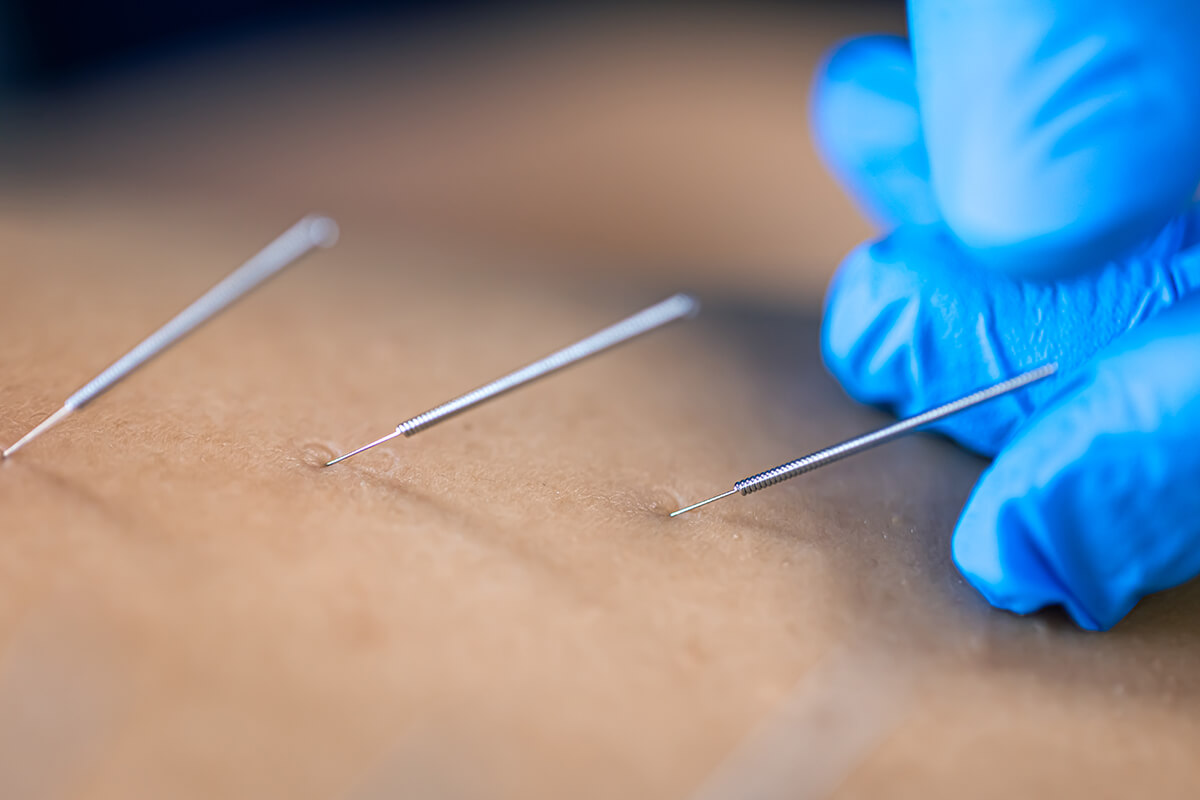
During treatment, your therapist inserts a fine needle into a trigger point or dysfunctional muscle. This may cause a brief muscle twitch, which is a normal and desired response. This process helps:
- Release tight or knotted muscles
- Reduce chronic pain and tension
- Improve blood flow and healing
- Reduce pain and inflammation
- Faster injury recovery
- Increase range of motion
- Restore mobility and muscle activation
Most sessions last between 10 and 20 minutes, depending on the area being treated. Electric stimulation is also often used.
Conditions Dry Needling Can Help With:
- Neck and back pain
- Chronic Tension
- Shoulder and rotator cuff issues
- Headaches and migraines
- Hip and gluteal pain
- Tennis elbow and golfer’s elbow
- Plantar fasciitis and Achilles pain
- TMJ/jaw pain
- Muscle strains and overuse injuries
Some people feel immediate improvement, while others notice changes over the next 24–48 hours. It is recommended to try 2-3 sessions to appreciate the benefits and response. These appointments are typically scheduled 5-7 days apart for best results.
Dry Needling can be highly effective on its own but is often even more beneficial when combined with chiropractic care or manual therapy, making it easier to exercise, recover, and stay active.
Dry Needling vs. Acupuncture
Although both use thin needles, they differ in purpose and approach. If you are not sure which approach is best for your condition, book an initial assessment, and Dr. Kym deGruchy will review the treatment approaches best suited to your individual case.
Dry Needling: Targets trigger points and dysfunctional muscle tissue to reduce pain and improve movement.
Acupuncture: Based on traditional Chinese medicine and focuses on restoring energy flow (Qi) through meridians. In Western medicine, acupuncture is recognized as an effective way to manage pain, improve movement, and enhance overall physical performance. Treatments can help release tight muscles, improve circulation, reduce inflammation, and restore a healthy range of motion.
What to Expect During Your Appointment
- A full assessment by Dr. Kym deGruchy to determine if dry needling is right for you
- Explanation of the treatment and what sensations to expect before, during, and after.
- Needle insertion into targeted muscles
- Once complete, the needles are safely removed and disposed of. The region of treatment may feel heavy, tired, or sore. You may also feel more mobility and less pain.
- Follow-up exercises or manual therapy to reinforce results
- Most patients can return to normal activities immediately after treatment.
Request an appointment – Book Your Dry Needling Session with Dr. Kym deGruchy, to help with muscle tightness, chronic pain, or movement limitations.
Update the information on Acupuncture (description provided below)
Acupuncture
Acupuncture is one of the most widely used sensory stimulation therapies, rooted in Traditional Chinese Medicine (TCM) and now supported by modern scientific research. This ancient technique involves the insertion of fine, sterile needles at specific anatomic points (known as acupuncture or meridian points) to restore balance, promote healing, and relieve pain.
Types of Acupuncture
- In TCM, acupuncture is used to regulate the flow of Qi (energy) through pathways in the body called meridians.
- In Western medicine, biomedical acupuncture is recognized as an effective way to manage pain, improve movement, and enhance overall physical performance. Treatments can help release tight muscles, improve circulation, reduce inflammation, and restore a healthy range of motion.
- Headaches and migraines
- Neck and back pain
- Muscle strains, spasms, or postural stress
- Stress and tension syndromes
- Chronic injuries and post-operative pain
- Premenstrual syndrome (PMS)
- Golfer’s and tennis elbow
- Carpal tunnel syndrome
- Rotator cuff injuries and frozen shoulder
- Bursitis and arthritis
- Shin splints and knee pain
- Nerve pain (numbness, tingling, sciatica)
- Anxiety and stress
- TMJ
- Many more
- Initial visit – a history and examination will take place to determine what treatment is best for your condition
- Explanation of the treatment and what to expect before, during, and after
- Needle insertion with the needles staying in place for 15-20 minutes.
- During your session, you’ll be encouraged to relax, focus on your breathing, and allow your body to respond.
- It is recommended to trial acupuncture for 3-4 visits to determine if it will be beneficial for your condition. Some people respond immediately, while others may take a few sessions to appreciate the results.
- Once complete, the needles are safely removed and disposed of. Most patients find acupuncture to be a calming, restorative experience.
- It is recommended to avoid exercise for 3-5 hours following an acupuncture session.
Insurance Coverage: Some insurance plans may cover acupuncture services only when performed by a registered acupuncturist. If your plan does not allow for an acupuncture provider, you may still be able to claim your treatments under chiropractic services. We recommend checking with your insurance provider before booking to confirm coverage.
Request an appointment today and discover how acupuncture can support your pain relief, recovery, and overall well-being.
Request an appointment today and discover how acupuncture can support your pain relief, recovery, and overall wellbeing.